

Utility Trenches, Drainage Lines, and Foundations: The Hidden Materials Every Build Needs
Every structure that rises above grade begins with work that nobody sees. The ground beneath a finished building, parking lot, or roadway holds a network of trenches, drainage channels, and foundational beds that quietly carry the entire load above them. When those hidden layers are built with the appropriate materials and process, the structure above performs as intended. When they are not, the problems surface in ways that are expensive and difficult to reverse.
April 23, 2026
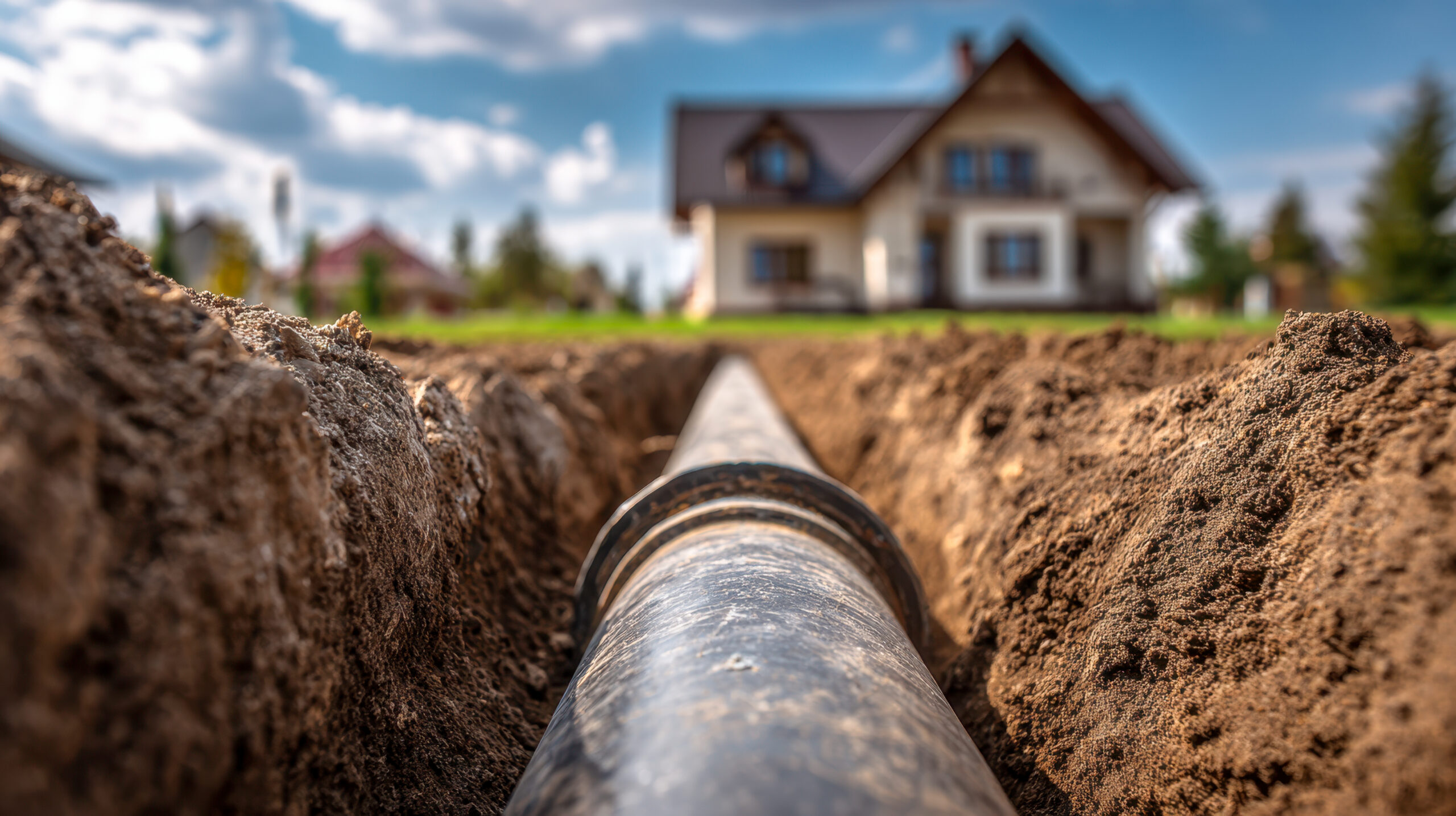
What Goes into a Utility Trench
Trench construction is one of the most material-specific phases of any site work project. The material sitting directly beneath and around a utility pipe controls how point loads transfer from the pipe to surrounding soil, preventing concentrated stress from deforming or fracturing the line. Crushed stone aggregate in the bedding zone distributes pressure evenly and absorbs minor shifts in the soil profile without pushing against the pipe wall. The gradation of that aggregate, the size range and shape of the stone, directly determines how well it compacts and how stable the trench bottom remains under traffic loading above.
Above the pipe zone, backfill material carries its own set of requirements. Granular fill with controlled compaction characteristics prevents the settlement patterns that crack pavement surfaces and pull apart above-ground structures years after installation. Select aggregate backfill, when placed in lifts and compacted to specification, creates a column of material with predictable behavior under load rather than the irregular movement that native soils often introduce.
Drainage Lines and the Aggregate That Makes Them Work
Subsurface drainage depends almost entirely on the void structure of the aggregate surrounding the pipe. A drainage system placed in the wrong material, or the right material placed incorrectly, loses function within a single freeze-thaw cycle as fines migrate into the voids and block flow paths. Open-graded aggregate, sized to match the drainage application, maintains permeability season after season because the angular particle shape resists packing and holds the void space open. That consistent internal void structure moves water away from building slabs, roadway bases, and buried utilities before hydrostatic pressure builds.
While more than just a filter medium, the aggregate envelope around a drainage pipe distributes the weight of the soil column above directly into the ground rather than concentrating it on the pipe itself. Washed, well-graded drainage stone placed with appropriate compaction prevents pipe deflection while water moves freely through the perforations. Choosing the wrong gradation, even marginally, shifts the balance between drainage capacity and structural support in ways that shorten the effective service life of the system.
Foundations: Where Ready Mix Does the Work
Concrete foundations transmit every load the structure above will ever carry, concentrating those forces into a bearing area that interfaces directly with the soil or rock below. Ready mix concrete placed into a properly prepared subgrade transfers column loads, wall loads, and lateral forces without the internal stress fractures that result from inconsistent mix water ratios or inadequate curing time. The mix design determines how the concrete behaves under sustained loading, not just at placement, and the aggregate structure within the mix affects shrinkage behavior, internal density, and crack control across the full-service life of the foundation.
Beneath any concrete foundation, the aggregate base governs bearing capacity before a single yard of ready mix arrives on site. Compacted crushed stone creates a uniform, stable platform that prevents differential settlement under the slab or footing, removing the uneven support conditions that introduce bending stress into concrete members that cannot flex without cracking. The thickness and compaction of that base layer is engineered alongside the foundation in order that the two materials work together, not in sequence.
Trenches, drainage lines, and foundation beds represent the phases of construction that generate the least visible progress but carry the highest consequence for everything built afterward. Material variability at the subsurface phase, whether in gradation, mix design, or placement consistency, creates structural problems that surface years into a project’s service life. The proper supplier brings certified mix designs, consistent gradation control, and reliable delivery scheduling to every phase of the subsurface build, removing variability before it enters the ground.